
A minimalist architectural detail of a sundial or a modern c
Section 01 // Theory

Temporal Value of Capital

Analysis of the Time Value of Money (TVM) principle. A study on how temporal factors dictate purchasing power and accumulation efficiency.

The concept of TVM posits that a specific sum of money possesses greater utility in the present than an identical sum in the future. This is due to its potential earning capacity. This fundamental core principle of finance asserts that, provided money can earn interest, any amount of money is worth more the sooner it is received. Within the framework of Capital Accumulation Encyclopedia, we examine how this delay in consumption impacts the total acquisition cost of major assets.

Understanding the temporal nature of capital requires a shift from nominal value to real value. Inflation and interest rates act as the primary variables in this equation. When planning large-scale acquisitions, the failure to account for these variables often leads to a significant erosion of purchasing power. Vorvorin provides the technical framework to calculate these deviations with precision.
Compounding Theory

"Compound interest is the addition of interest to the principal sum of a loan or deposit, or in other words, interest on interest."

In the context of long-term saving, compounding represents the mathematical advantage of time. Capital is not static. When reinvested, the returns generated in period t become part of the principal for period t+1. This creates a geometric progression rather than a linear one. For those utilizing Sinking Funds Management, this effect reduces the required monthly allocation over longer horizons.

Annual Percentage Yield (APY)
The real rate of return earned on a savings deposit or investment taking into account the effect of compounding interest.
Frequency of Compounding
The number of times per year the interest is calculated. Higher frequency increases the final capital sum.

Discounted Cash Flow (DCF)

DCF is a valuation method used to estimate the value of an investment based on its expected future cash flows. In personal capital planning, this allows an individual to determine the Present Value (PV) of a future purchase. By discounting the future cost by an expected rate of return, one can identify exactly how much capital is needed today to meet a future obligation.

  • Badge Identification of future expenditure requirements.
  • Selection of an appropriate discount rate based on risk profile.
  • Mathematical reduction of future values to their present-day equivalent.

Opportunity Cost Calculation

Every financial decision involves a trade-off. Choosing to allocate capital to one asset inherently means forgoing the potential returns from another. This is the hidden cost of capital usage.

Implicit Costs

These are not direct expenses but represent the loss of potential income. For example, using cash for a purchase instead of investing it in a low-risk index fund.

Analyze Behavior

Explicit Costs

Direct out-of-pocket expenses related to capital management, such as transaction fees, maintenance costs, and inflationary loss.

Legal Frameworks

Time Horizon Mapping

Mapping your time horizon is the act of aligning capital availability with intended expenditure dates. Short-term horizons (1-3 years) require high liquidity and low volatility. Long-term horizons (10+ years) allow for higher exposure to growth-oriented assets.

Technical Note

Duration matching is used to ensure that the maturity of investments aligns with the date of the planned purchase, minimizing liquidation risk.

A technical financial chart showing time horizons and risk c
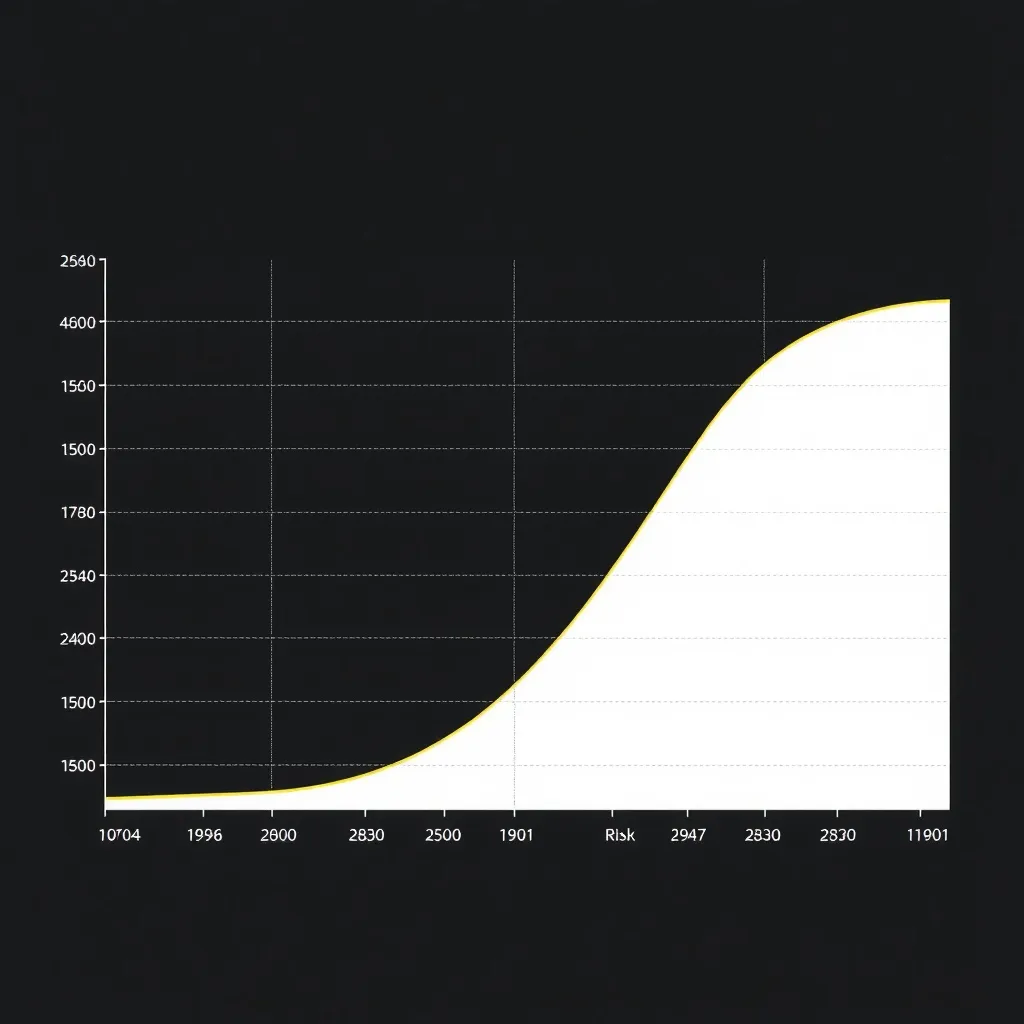
Fig. 1: Correlation between time horizon and asset volatility tolerance.

Frequently Asked Questions

How does inflation affect the time value of capital?

Inflation reduces the purchasing power of money over time. If the rate of return on capital is lower than the inflation rate, the real value of the capital decreases, even if the nominal value increases.

What is the "Rule of 72" in temporal planning?

It is a simplified formula to estimate the number of years required to double the invested capital at a fixed annual rate of return. Divide 72 by the annual interest rate to find the duration.

Why is present value more important than future value?

Present value allows for immediate allocation and utility. It represents the "buying power" available now, which can be leveraged to generate further returns through investment mechanisms.

Legal Notice & Project Nature

This platform functions as a standalone informative reference and technical project. Vorvorin operates independently and maintains no formal affiliation with government departments, public sector organizations, commercial financial suppliers, or established brand entities. The data provided is for educational purposes regarding capital structures and does not constitute regulated financial advice.

Refine Your Accumulation Strategy

Access our comprehensive index of financial terminology and calculation methods to optimize your long-term capital efficiency.